American society is certainly at an interesting point in its history. Over the last 225+ years, we established colonies, then states and a nation, then added more territory and more states. We expanded over a vast landscape, full of bounty, in the form of natural resources (trees, water, soil, minerals, animals, etc). Our ancestors had slaves, killed Native Americans (Indians), killed each other (pretty regularly, in the Old West), immigrated, uprooted families for better lives in other parts of the country, had land, lost land, got more land, harvested the timber, farmed the cleared land, move on in search of more productive land, utilized irrigation systems and controlled rivers, invented all sorts of things, pushed through the industrial revolution, into the agricultural "green revolution", polluted everything on this green earth, tried to clean it up, and continued polluting it, while also harvesting it more, and farming it more. We have preserved landscapes for their beauty, only to destroy countless other beautiful landscapes in the name of growth.
Ahhhh. Growth. A term with so many connotations. Economic growth, the term most important and all too familiar to Americans right now, is also one that may have been misguiding our American society all these last 225+ years, and even the civilizations before that. Economic growth implies an economic system that expands, rather than contracts, or stays flat.
Economic growth has been associated with increased quality of life, among other things, to the point that, a "1st World" country with a strong economic system is considered to have higher quality of life than "3rd World" countries, although they have entirely different cultural constructs and values. Quality of life has, in effect, been narrowed to the daily things that American (and European) society have come to experience over the past 150 years.
An expanding economic system also necessitates having the resources to continue to expand. In the past, this was not as much of an issue. A significant portion of the world, in the 19th century and even the early 20th century, had not been "pillaged" for it's resources. The global population was simply too small, and trade was only impacting certain regions of the globe that supplied specific goods.
Fast forward to the present. SEVEN BILLION people. Even as the association between quality of life and economic growth continues to persist, quality of life, measured in terms of happiness of the average citizen, has truly not gotten better in our industrialized, American society. Money has not made people happier. Stuff has not made people happier. We currently have significant disparities in the social income scale, problems with our health system, a significant lack of jobs, millions in debt, and so on. People work too much, have poor health, poor family lives, poor environments, and in this current economy, it's not getting better. Our resources, over the past century, and really, the past half-century, have seen a significant decline. The ever-expanding world economy ballooned at a rate that was furthered by the American way-of-life, full of stuff, greed, stuff, excess, money, "likes and preferences" before intelligent and rational thought. We took full advantage of a system that was giving us everything, for cheap, and allowed our environments, and other countries and continents to take the brunt of our decisions.
Now, everyone wants to be like us, which is ironic, because the current "US" is not in a very good state, primarily because of our decisions over the past half-century. Our urban infrastructure, from sanitary and storm sewers, to roads and highways, is in complete disrepair. Our health choices, of eating cheap and easy fast food for the last 50 years, and our living choices, in a suburban system that allows us to drive everywhere, have resulted in all sorts of health epidemics, from obesity in adults and children, to diabetes, higher cancer rates, etc., which all result in more health expenses, and more pressure on health insurers.
So, where do we go from here? Do we continue, in the name of economic growth, as a model to improve our conditions at present? Will economic growth truly help fix those problems, or will it just continue with the status quo? Will increased revenue allow governments to invest in infrastructure, or will populations voice displeasure with government spending? Will revenue be used to invest in infrastructure that takes US into the next century, or will we continue with the status quo of auto-centric infrastructure? Will it be "me, myself, and I" or will it be "for the greater good
These are the interesting (and challenging) questions we have to answer, preferably by American society, but likely by a small minority of individuals that are truly interested in sustaining America into this century and the next, and not simply interested in their own success.
Monday, September 26, 2011


Wednesday, July 28, 2010
Local Food. Right Now. Come on, do it. Do it. Just do It.
A central component of green urbanism is food--local food. Local food means either grown within the city through urban farming, i.e. someone's backyard (or frontyard), or a vacant lot turned into a mini farm; or it means from the surrounding rural areas, i.e. the Bluegrass Region.
This article from Grist.org discusses the concept of local, healthy food and a new pilot show is mentioned, called Food Forward, produced by folks out in California. Here's the video trailer. The point of the show is to provide a more inspiring and forward-looking view of "people who are changing how we eat in America." The trailer specifically looks at feeding children better food, and leaving a better legacy for our children. That's a very admirable and justified thing to do. The children of our society have become terribly unhealthy, and that will lead to all sorts of healthcare issues later in life for America. That said, I'm more interested in feeding all of us better.
First off, I know it's not totally realistic to suggest we can feed everyone locally--at least not through the winter. And at least not right now. This is primarily because most people have simply lost the skills of farming, harvesting, and storing food--we have devolved in that respect. But also, a lot of people either don't have the time, or won't make the time, to raise their own garden. It is a decent bit of work, and requires maybe putting in a little time on weeknights, and a little weekend work.
Imagine the amount of food that could be grown in all the unused/lesser-used spaces in the city though. Check out other cities: Front yards (only function aesthetically, and are a resource-hog as it is), back yards (reduced functions with more and more gaming technology and such), some parks, vacant lots (detroit), school yards, etc.
Next post, we'll take a look at Lexington, and the Bluegrass--what's being done, and what else can be done.
Next post, we'll take a look at Lexington, and the Bluegrass--what's being done, and what else can be done.
Saturday, July 24, 2010
Civic Mindedness
Suum cuique: To each, his own (thanks Wikipedia). Every person is different, and has unique talents, ideas, and opinions. Here in Lexington, there are thousands of people that have all taken our education and life philosophies in different directions. We all make daily decisions based on education and life philosophies. This is true for almost any city in the country.
As a collective whole though, many lack an understanding of how each decision we make impacts our economy, our city, and our environment. We lack an understanding of the basic functions of a city or town, and how that works in conjunction with the people living there, and the environment both in the town and in the countryside. Basically, we lack a civic mindedness.
Civic mindedness involves both understanding these issues, and engaging our leaders in conversation on these issues. For example, we all understand the idea of a self-fulfilling prophecy, right? Now, let's consider a road, two lanes (one each way), and during rush hour, that road becomes extremely jam-packed. Everyone wants the road to be widened, so that the traffic will lessen during rush hour. The reality, however, is that the capacity of that road now increases, and supports more traffic. Widening a road to four lanes will only make things worse by creating even greater congestion. It is a self-fulfilling prophecy. Widening the road also causes a substantial increase in environmental impacts (urban heat island, stormwater runoff and pollution). This problem, then, requires a basic understanding of the impacts of choosing to drive everyday, the real impacts of widening a road, and the costs of choosing to do that, as opposed to planning a city better.
In another example, many individuals are unaware that storm sewers (the grates along the curb) empty directly into local streams, full of whatever trash people toss out their windows (including cigarette butts), and the pollutants on the road surfaces from regular traffic flow. Some even pour chemicals straight into the storm sewer. When all these pollutants reach local streams, they kill aquatic life (fish, frogs, small insects essential to the aquatic food chain). This subsequently has impacts downstream, i.e. Elkhorn Creek pollutants can impact the Kentucky River. Then, eventually, a clean-up effort must be conducted, often an expense by the city, to restore a stream to healthy conditions--all because we, as citizens, failed to understand the impacts of our decisions.
Of course, there are some who do have a civic mindedness, and engage their community and leaders in critical thought. For most civic actions, like land developments, road bulding/widening, zone changes, and such, public forums are held so that citizens can comment. Recently, the Centrepointe project is an example of a land development that caused a significant citizen uproar, particularly with those who understood the impact it would have on the center of downtown. In most instances though, the collection of individuals in these forums are not wholly representative of the community, and do not provide a substantial voice that understands the real impacts of such civic actions. How can the political leaders make decisions that are in the best interests of the community, if the community is not knowledgeable on the subject, or chooses not to speak? Then, how can the community be upset at the result?
Knowledge of these issues is important, because choosing political leaders for our community is central to those potential leaders understanding these issues. If the citizen base does not understand them, then they certainly can not be expected to challenge the political leaders' knowledge of such issues. Now, with this in mind, I would like to challenge each of you to become better educated on the impacts of shopping, driving, living, and dining decisions, both in your life and the life of our city, economy, and environment. I would like to challenge you to participate more fully in our democratic republic--do not allow yourself to become a couch potato robot. Our society is in a challenging situation, and needs greater critical thought and collective participation to become a city of the 21st century (and beyond)--not a remnant of the 20th century.
Monday, July 19, 2010
Blog Renewed
I've been busy for the last few months (or more), and have not been focused on this blog. However, in the coming weeks and months, I intend to redirect some time and effort into this blog, with more consistent comments and thoughts. Previous posts spoke more generally about "Green Urbanism," but from now on, my posts are going to be directed primarily towards the Inner Bluegrass Region of Kentucky. Since I live in Lexington, the majority of posts will be specifically related to current events and issues in/around Lexington. Hope you enjoy the future of this blog!
Tuesday, January 26, 2010
Fighting for our Future
Let it be known--this is not a typical post for this blog. First, read this:
Student Activists Demand Alternative Energies on Campus
Burning Coal on Campus is Hazardous to Student Health and the Commonwealth
LEXINGTON, Ky: Tuesday, an anonymous group of students from the University of Kentucky hung a banner from a parking structure near Rose Street to protest the university’s use of coal power on campus. The banner, reading “COAL: A Tradition of Oppression. STUDENTS: Let’s Change Our Legacy”, included a reproduction of the familiar UK symbol, with a burning smokestack between the letters instead of the usual Memorial Hall steeple.


Deemed the “midnight strike force” by local news sources, the students are fueling a campaign to move the university beyond the “outdated” technology of coal power and in the direction of cleaner energies. One of the students, an economics and environmental studies senior, said, “You can’t argue facts. Coal is a finite resource and the shift to alternative energies has to begin immediately. Kentucky must realize its potential to be progressive and enterprising in the country’s transition toward environmental awareness.”
The students’ use of the word “oppression” alludes to the detrimental effects of coal not only on the environment, but on the miners and communities in coal-mining regions of the state. An estimated 12,000 coal miners have died from black lung in the past decade, and their families are equally affected. The real tragedy, though, lies in mountain top removal (MTR) coal mining, a practice that more and more coal companies are using to extract coal at a lower cost. MTR employs explosives to decapitate mountains, and the leftover waste is deposited in surrounding valleys. The chemicals and residue bury and contaminate freshwater streams, thus poisoning the water supply for surrounding communities and devastating local ecosystems.
While the university, directly, does not deal in MTR coal, Kentucky Utilities provides a significant portion of the campus’s power, and is a known distributor of energy derived from the controversial method.
“The University of Kentucky is the flagship university of the state, and as such, sets the example for the rest of Kentucky. Any change we can make toward cleaner energy and the diversification of jobs and economies will affect the entire Appalachian region drastically, and for the better. This change is one that can’t wait,” said an Appalachian Studies junior.
It seems momentum has not died from the announcement last semester that the new Wildcat Coal Lodge would be endorsed by the coal industry. Tuesday’s banner was one of a series that has hung on campus since October, indicating that the students have not forgotten President Todd’s decision, and that they still worry for the future of their school’s energy and integrity.
These students at the Kentucky bring up an important issue, one that relates entirely to the concept of Green Urbanism. First, Green Urbanism, while it maintains an inherent relationship with cities, requires that the inputs into the city (energy, materials, food, etc) utilize environmental, economical, and social sustainability. The absolute destruction of the earth
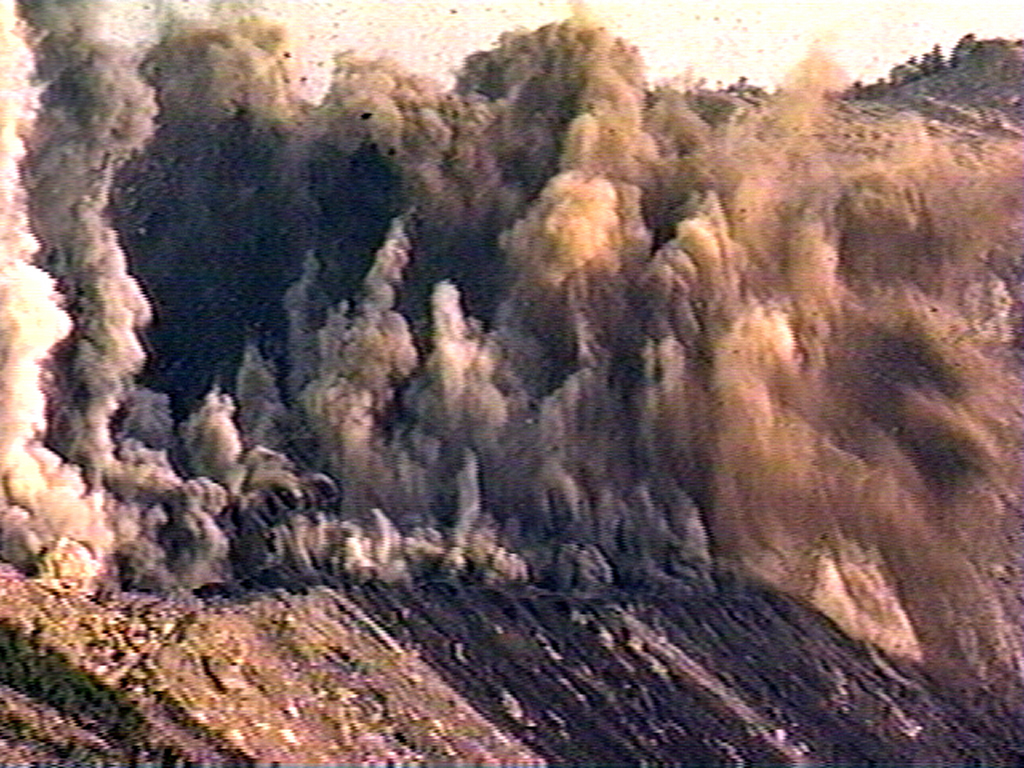
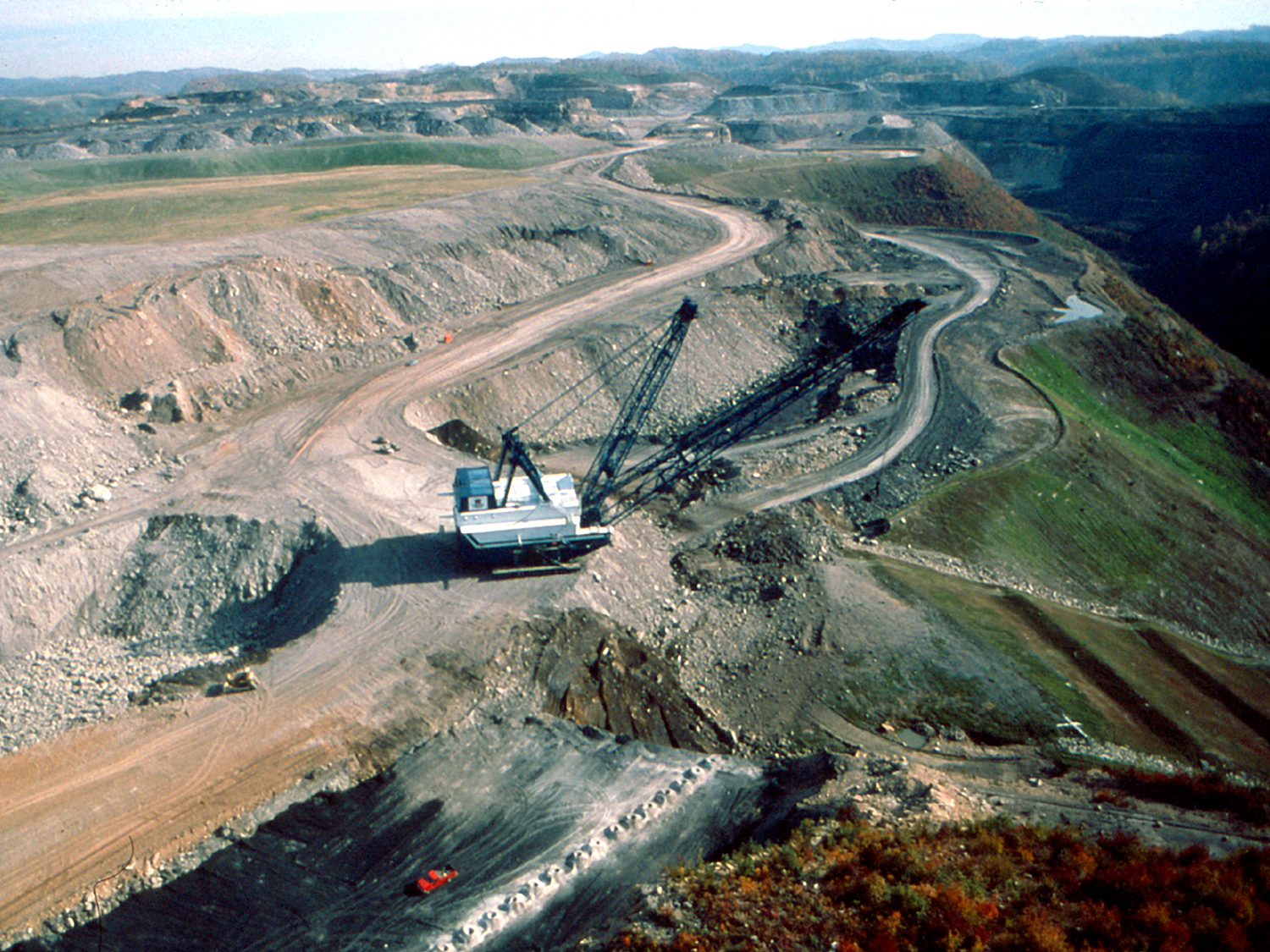
results in an absolute reduction in our environmental, economic, and social capital. Those landscapes don't just 'come back.' Nor can you just "restore" that landscape to it's former self (contrary to what many MTR companies want YOU to believe that they do). The soils become so compacted that plants are unable to grow. This= less forest, which =less possible timber resources, but also= less places for trees to grow and remove CO2 from the atmosphere.
Now, the second part of this is much more connected to the urban system: burning coal in/near urban areas produces air pollution, which has a multitude of health impacts. (And don't take that to mean we should just put coal-burning power plants 40 miles outside of cities--that means we would have to use more coal, and more resources to get that energy transferred that far back to where it is needed--oh wait...we already do that???....save that one for another time). The coal backers will come back here with the whole "clean coal" mumbo jumbo---but they may want to check their own industry. Just last week, Don Blankenship debated Robert Kennedy, Jr. (and was completely embarrassed by Kennedy, I might add). At the end of the debate, Blankenship conceeded that carbon sequestration, the advocated method of "clean coal," is a bunch of hogwash. So, "clean coal" = a pipe dream.
The alternative is we use wind, solar, geothermal (yes), and we use these alternatives on a decentralized system, rather than a centralized system, like coal power. More importantly, we rebuild/retrofit the existing urbanized landscape with passive-solar heating, more efficient insulation, green roofs, living walls, and other intelligent (yes) ideas. This will help reduce overall energy use, which will help reduce energy need, reduce coal input, reduce coal removal, and eventually, remove coal from the equation completely with replacement by renewable energy. Then, we are talking about the sustainability of our environmental, economic, and social capital, and we are talking about Green Urbanism.
Wednesday, November 11, 2009
Zombie malls and walkable urbanism
(This post is a response to a recent series of articles about dead and dying malls in Lexington, KY)
Rather than thinking of Lexington Mall as a blight or an eyesore, think of it as an incredible opportunity. Across the country, demographic changes and resource constraints are driving increased demand for walkable urban environments. Growing up in Lexington in the 1980s and 1990s, I watched the development of shopping centers at the edge of the city and sprawling subdivisions in Fayette's neighboring counties. This development pattern was appealing in a world of cheap gas and large households. But times are changing. Oil is more scarce and more expensive. Households are shrinking, driven by young single professionals and empty nesters. And with increasing awareness of the challenges of climate change, people are looking for a more "sustainable" lifestyle.
This is not some east- and west-coast trend that doesn't apply to Lexington. The recent housing market study commissioned by Lexington's Division of Planning determined that Lexington has an underserved demand for "higher density product and diverse communities where residents are motivated by proximity to work, walkable environment, and access to green space." Recent downtown development has begun to meet this need, and projects around the Newtown Pike extension are promising; but it's not necessary to focus all the energy downtown.
Long before recent changes in the housing market, a variety of factors--from online retail to continual development of newer, bigger malls further on the urban fringe--began undermining older retail centers like Turfland and Lexington Malls. This problem is not unique to Lexington, and the innovative solutions utilized elsewhere should guide plans for Lexington Mall. In her book Retrofitting Suburbia, Ellen Dunham-Jones examines similar "zombie malls," and shows how they can be remade to thrive in a more urban world.
The model of cities with a single high density center is a relic of the past. The major retail and office nodes along New Circle, Man O War, and the major roads that make up Lexington's "spoke and wheel" transportation system show that automobile oriented development has been poly-centric for a long time now. Why shouldn't high density walkable and transit-oriented districts also spread throughout the city? Lexington's political leaders, developers, and citizens should embrace Lexington and Turfland Malls as two great places to start this trend.
Rather than thinking of Lexington Mall as a blight or an eyesore, think of it as an incredible opportunity. Across the country, demographic changes and resource constraints are driving increased demand for walkable urban environments. Growing up in Lexington in the 1980s and 1990s, I watched the development of shopping centers at the edge of the city and sprawling subdivisions in Fayette's neighboring counties. This development pattern was appealing in a world of cheap gas and large households. But times are changing. Oil is more scarce and more expensive. Households are shrinking, driven by young single professionals and empty nesters. And with increasing awareness of the challenges of climate change, people are looking for a more "sustainable" lifestyle.
This is not some east- and west-coast trend that doesn't apply to Lexington. The recent housing market study commissioned by Lexington's Division of Planning determined that Lexington has an underserved demand for "higher density product and diverse communities where residents are motivated by proximity to work, walkable environment, and access to green space." Recent downtown development has begun to meet this need, and projects around the Newtown Pike extension are promising; but it's not necessary to focus all the energy downtown.
Long before recent changes in the housing market, a variety of factors--from online retail to continual development of newer, bigger malls further on the urban fringe--began undermining older retail centers like Turfland and Lexington Malls. This problem is not unique to Lexington, and the innovative solutions utilized elsewhere should guide plans for Lexington Mall. In her book Retrofitting Suburbia, Ellen Dunham-Jones examines similar "zombie malls," and shows how they can be remade to thrive in a more urban world.
The model of cities with a single high density center is a relic of the past. The major retail and office nodes along New Circle, Man O War, and the major roads that make up Lexington's "spoke and wheel" transportation system show that automobile oriented development has been poly-centric for a long time now. Why shouldn't high density walkable and transit-oriented districts also spread throughout the city? Lexington's political leaders, developers, and citizens should embrace Lexington and Turfland Malls as two great places to start this trend.
Tuesday, October 6, 2009
Charter Cities
Paul Romer, an economist at Stanford, has been recently begun advocating for a concept he calls a "charter city". In places like the United States, businesses and similar private enterprises are fairly nimble and able to adapt to changing conditions. Just as importantly, there is a strong system of rules and norms of behavior that allow businesses to fail or to become obsolete, while new ones step up to meet a need. In contrast, cities and other governmental entities are much more resistant to change, generally by design. This is generally a good thing for governments, where stability is essential. For businesses and individuals to adapt quickly, the rules of the system in which they operate need to be stable and well understood.
However, Romer makes a good point: that as societies develop and grow wealthier, there are consistent changes that can be reasonably well anticipated. This is particularly true for cities. A rural community has different needs than a small town, which has different needs than a large city, which has different needs than a major metropolis. Sometimes those needs follow a logical progression, such as the provision of higher levels of police presence. But in other ways, the rules that develop as a small town grows into a city can be inappropriate or outright counterproductive for a major metropolis.
Romer works in the field of global development economics, so he's particularly interested in the application of charter cities to developing countries. His prime example of a charter city is Hong Kong, which was established by a cooperative treaty between the United Kingdom and China. This focus is appropriate, since the growth in urban areas that has already occurred in the United States still is just now underway or looming for much of the rest of the world. The availability of unoccupied land, the obvious requirement for the establishment of a new city, also presents great opportunity. However, as an urban planning researcher in the US, I wonder whether there's something we can learn from the idea here. Romer points out that it's much harder and less efficient to change a broken system than to create a new one and let more nimble entities (businesses and individuals) choose which system they want to be a part of.
I wouldn't say our system of cities in the United States is broken, but it clearly has its flaws. Many like me are concerned that the cities that grew up in the age of automobile-oriented suburban development are poorly suited to the approaching age of peak oil and climate change. It's scary and sad to think of letting these cities "fail" (think Flint, MI), but it's also clear that they can't easily be reformed in the same way that a business would reorganize.
Environmentalists and urban planners are often opposed to greenfield development (the construction of new neighborhoods on formerly undeveloped land). Ultimately, a charter city is a mega-scale greenfield development. However, for the opportunity to create a new city that breaks the mold formed over the last century, I think it's something entrepreneurial policymakers--particularly at the state and local level--should strongly consider.
However, Romer makes a good point: that as societies develop and grow wealthier, there are consistent changes that can be reasonably well anticipated. This is particularly true for cities. A rural community has different needs than a small town, which has different needs than a large city, which has different needs than a major metropolis. Sometimes those needs follow a logical progression, such as the provision of higher levels of police presence. But in other ways, the rules that develop as a small town grows into a city can be inappropriate or outright counterproductive for a major metropolis.
Romer works in the field of global development economics, so he's particularly interested in the application of charter cities to developing countries. His prime example of a charter city is Hong Kong, which was established by a cooperative treaty between the United Kingdom and China. This focus is appropriate, since the growth in urban areas that has already occurred in the United States still is just now underway or looming for much of the rest of the world. The availability of unoccupied land, the obvious requirement for the establishment of a new city, also presents great opportunity. However, as an urban planning researcher in the US, I wonder whether there's something we can learn from the idea here. Romer points out that it's much harder and less efficient to change a broken system than to create a new one and let more nimble entities (businesses and individuals) choose which system they want to be a part of.
I wouldn't say our system of cities in the United States is broken, but it clearly has its flaws. Many like me are concerned that the cities that grew up in the age of automobile-oriented suburban development are poorly suited to the approaching age of peak oil and climate change. It's scary and sad to think of letting these cities "fail" (think Flint, MI), but it's also clear that they can't easily be reformed in the same way that a business would reorganize.
Environmentalists and urban planners are often opposed to greenfield development (the construction of new neighborhoods on formerly undeveloped land). Ultimately, a charter city is a mega-scale greenfield development. However, for the opportunity to create a new city that breaks the mold formed over the last century, I think it's something entrepreneurial policymakers--particularly at the state and local level--should strongly consider.
Monday, September 14, 2009
But I like the water....
Everyone loves water--sounds, sights, and of course, swimming in it! In fact, we love water so much, we build right up next to streams, creeks, and rivers--right in the floodplains. This is common both in cities, suburbs, and the countryside. Cities eventually decided to put most streams into pipes and culverts though, so half the time, we don't even realize where the streams are, or should be naturally.
It's ok to like water, to enjoy it--but we have to realize the limits to our actions. Floodplains are critical for stream/river health. They help relieve the river of excess flows (or floodwaters), and the riparian buffers associated with the floodplain help filter pollutants, regulate stream temperature, and allow for an increase in biodiversity. If we let floodplains and appropriate riparian buffers be, we would largely be ok.
The problem though, is that because we do build in floodplains and remove riparian buffers, and we remove the ability of streams and rivers to perform natural functions (which they do free of charge), we require more economic input the mediate all the problems that occur because of our previous decisions. Furthermore, insurance for everyone is affected. If you have home insurance, and the insurer also insures people in who live in floodplains, you are at an ever-increasing risk of having your rates go up due to those other folks. Makes very little sense, right? Build in floodplains, remove natural functions, then get paid back on someone else's dime for having your home destroyed by a flood...
The other possible insurance scenario is that the government, or government programs (such as FEMA), insure construction in floodplains, knowing well that they will eventually flood. Of course, we all know by now that tax dollars are used for any government programs, and that is no different here--YOUR tax dollars insure wasteful building in floodplains.
In the end, this all comes down to poor economic logic--deregulation and an entirely free market is not the way to go. Regulations, if written well, are meant to prevent wasteful spending, particularly wasteful tax dollar spending. Without regulations, Appalachia would be gone, our waters would still be polluted like in the mid 1900s, more people would be dying from cancer, we'd have polluted our earth much worse, etc. And ultimately, all that means more expenses that were unnecessary if problems were dealt with from the beginning.
Saturday, August 29, 2009
I'm Just a Regular Person--What Can I Do?
Green Urbanism at its peak will need the understanding and participation of a majority of everyday citizens. Everyone has the ability to understand both the parts of green urbanism, and to participate in parts of it.
First and foremost, everyone can make decisions on where to live. This alone has major impacts on other components of green urbanism. For example, if I choose to live in a 3000 square foot house in a court or cul-de-sac in the middle of a suburban neighborhood, I've already sealed my fate as an automobile-driving, energy intensive American. The house itself is terribly inefficient, and not meant to allow for natural air circulation from open windows. My kids, should I choose to have some, would grow up in the same environment. With no park within an walkable distance, my kids would either play in the backyard, which is truly an unimaginative, dull environment, or sit inside and play video games all day. The neighborhood would probably govern any additions or changes to the house, such as the addition of a green roof. They might not allow it.
A second opportunity for every person to participate in the push towards green urbanism is to ride transit more, or ride your bicycle. Not only is it more healthy for every person to ride a bicycle more, or walk to transit stops, it is also intelligent. Everyday, people that live near you drive in the same direction, possibly to the same general office park or complex. You each drive separately, spending twice (or more) the fuel and money necessary. Instead, you could each ride the bus, along with 15-20 (or more) other individuals. On the bus you could read a book, something that you never have time to do normally with the 30 minutes (minimum) that you spend driving each day. Even better, your choice to ride the bus has influence on the types of land uses or business and retail types that occur throughout the urban environment. More people riding the bus equals more small shops and jobs and density around transit stops, and a more walkable environment.
Third, everyone that currently lives in a suburban home with a yard can easily plant vegetables (and some fruits) in their yard. They can create an urban agricultural base. By growing your own veggies and fruits, you have control over what you eat--and whether or not it contains diseases. By choosing to grow a garden, you also remove lawn space, meaning you no longer go through the ridiculous process of "water grass-mow grass-fertilize grass with synthetic fertilizers-water-mow grass again." You also no longer use fuel to do this. You also discourage the terribly inhumane and unsustainably industrial agricultural systems that have been in place for years. Did you know that illegal immigrants (Mexican) in California's famed fruit agriculture zone get paid vastly under minimum wage (off the books, of course), to farm a region that is supported entirely by irrigation systems, rather than natural precipitation patterns. So, in one fell swoop, you have created a more healthy lifestyle for you and for others, while also helping the environment.
There are plenty of other things you can do directly related to being "green." Retrofit windows to be uber-energy efficient (called passive solar). Put solar panels on your house to reduce your energy consumption from coal power plants. Better yet, look into new windows that may soon have floppy solar sheets installed between the panes. Install rain gardens around your yard below your roof downspouts. Plenty of cool opportunities!
Friday, August 28, 2009
Artful Rainwater Design
Water. We all drink it, everyday. Some drink out of a plastic bottle, some out of Nalgenes, Kleen Kanteens, or SIGGS. The water we drink though comes from the sky, from rain. The first post of this blog discusses the hydrologic cycle in the context of watersheds. Stormwater is the human term for rainwater that falls on urban surfaces. Stormwater is often removed via pipes, as quickly and efficiently as possible. This approach has consistently resulted in downstream flooding, stream habitat destruction, and other substantial environmental and social issues. Though over the years attempts have been made to correct the problems with this approach, it still continues to be a problem to this day.


There are alternatives though. Green infrastructure is starting to be more widely used to compensate for the negative aspects of the prototypical engineered stormwater management approach. Green roofs, bioretention swales and structures, rain gardens, and other such elements utilize natural systems to remove rainwater. Penn State Landscape Architecture professors Stuart Echols and Eliza Pennypacker recently called some of these green infrastructure techniques "Artful Rainwater Design (ARD)." These designs are named for their intent and ability to act as art in the urbanized landscape, and function as stormwater management mechanisms. In many instances, these designs are also used to convey information to the public, sometimes via signage, and other times simply through informative design.
Kevin Jensen, a graduate student at Penn State, has developed a survey to gauge just exactly what the public does comprehend from such designs. Regardless of whether you, the reader, may be interested in ARD, it would be extremely helpful for Kevin, and educational for yourself, if you took the time to complete the survey. If you are interested in learning more about ARD, have a gander at this site.


Thursday, August 27, 2009
Transit vs Food Production
A common component of advocates for sustainability is the use efficient public transit, rather than automobiles, to transport people through urban environments. It could be said that a "green city" is one that does have diverse and efficient transit options. For public transit to be efficient though, the urban environment needs to be sufficiently dense. The density provides enough people to ride the transit, and pay for its construction and operating costs over the long-term. Research suggests that sufficient density for street cars would be at least 4-5 story mixed-use and multi-unit urban structures. For light rail, it roughly doubles that of street cars.
Opposite transit in the equation of sustainability is that of food production. It has become quite popular to buy "locally grown, fresh" products. Research (and common sense) shows this is substantially more sustainabile than the industrial farming process for several reasons. First, the transportation costs (both environmental and economic) are reduced because food does not have to be shipped from South America or China to reach the consumer in America. Second, locally grown food is often (though not always) produced on a smaller scale, with less harmful inputs, and less land-intensive production processes. Inudstrial farming processes put harmful pollutants into the water system, and deplete the soil of its natural ability to produce. Third, locally grown food provides a much greater ability for the seller to keep track of where the food came from. This is particularly important with the food problems we have had recently, and will continue to have in the future.
Now, why are these two elements opposite each other in the equation?
Well, lets take New York City, for example. The Big Apple has monstrous skyscrapers, and is one of the most dense places on earth. It consistently has 10-story or taller buildings throughout much of the city. It has a great subway system, though no street cars. Taxis and buses are often used as well. However, New York City because of its extreme density, and lack of urban spaces to produce food, necessitates food imports from extreme distances, and necessitates industrial agriculture to provide those food imports. It is, in effect, a completely unsustainable city with regards to food production.
Then, you have on the opposite end of the spectrum a low-density, proto-typical American city, like Louisville, Kentucky. Louisville has a metropolitan population of just over 1 million. It has no street car or rail transit, and the bus system is like many others in the U.S., barely getting by. It is very suburban, and thus low-density, with strip malls, shopping malls, business parks, industrial parks, and other features that fail to create a more sustainable urban form. This city, like most others across the country (except for rust-belt cities like Detroit, Akron, etc that are losing population) takes every available piece of land on the suburban fringe and fills it in with automobile-oriented urban form. It too fails to provide urban spaces for a food production.
If both of these are wrong, what is right?
Well, during the later 19th/early 20th century, a fellow named Ebenezar Howard developed a concept called the "Garden City." His idea was create a central city hub, and then create sub-cities or towns placed radially out from the central city. In between the central city and the towns were to be farming, parks, and other green spaces that helped sustain the all the city and towns. These agricultural and green spaces would be kept as such for eternity, so as to keep the system in balance.
Howard's design and planning ideas were partially attempted in many places across the globe. Some towns were built to mimick the Garden City, but were never fully implemented as such due to a variety of reasons, including politics, technology, and even the general thought that it was not a good idea. Because many of these attempts were never implemented effectively, they failed to actually do what Howard had intended: be self-sustaining.
Current society faces far different land planning issues than Howard faced 100 years ago. But his general concepts are still relevant. We must realize that while it is important to have a dense urban core for both transit efficiency and mixed uses, and consistent density throughout our towns, villages, and cities, it is equally important to keep the density from crossing a point of unsustainable impacts on agricultural production. Furthermore, to counter-balance such density issues, we also need to create more permanent land trusts for food production within cities. Rather than continue to expand outwards without thinking, lands need to be planned, and growth patterns need to be planned. Just because America is a democratic society does not mean that we should abandon better land use practices for the rights of an individual to do with his land whatever he chooses. This is worse for all of us.
Monday, April 13, 2009
Sunday, January 11, 2009
From Planetizen, Slate
Robots, Not RoadsThe Obama stimulus package should be spent on transformative investments, not bridges and buildings.
Posted Monday, Jan. 5, 2009, at 4:09 PM ETThe incoming Obama administration and Congress are planning a huge fiscal stimulus package. They hope that such a stimulus will catalyze an economic turnaround and be a cornerstone of a "New New Deal." If the early reports are reliable, the stimulus will include a huge tax cut and will fund projects like road-building and bridge repair, laying the infrastructure foundation for the economy of the future.
Yet two huge problems with this approach must be confronted. First, the capacity of even the U.S. government to affect the overall global economy is limited. Suppose the package is $800 billion over two years: $400 billion is less than 1 percent of the global economy and a mere 3 percent of the U.S. economy. In relative terms, $400 billion isn't all that much more than the $152 billion spent on the 2008 stimulus, which had nary an impact on the economy.
Here is where the New Deal analogies are instructive. The New Deal probably didn't pull us out of the Depression; World War II did that. What the New Deal did was redefine the social contract—perhaps just as important an outcome. The ultimate significance of the Obama package may be not its short-term demand-side impact but rather its capacity to transform our economy and, in turn, some of the fundamental underpinnings of our society. This introduces the second major problem: The "off the shelf" infrastructure projects that can be funded immediately and provide immediate demand-side stimulus are almost by definition not the transformative investments we really need. Paving roads, repairing bridges that need refurbishing, and accelerating existing projects are all good and necessary, but not transformative. These projects by and large are building or patching the same economy with the same flaws that got us where we are. Our concern should be that as we look for the next great infrastructure project to transform our economy, we might rebuild the Erie Canal and find ourselves a century behind technologically.
This moment presents the administration with what is likely to be its best—and perhaps only—opportunity to have essentially unlimited capital (both fiscal and political) to spend on a transformative economic agenda. It is a unique moment to build a new foundation. It would be wise to ensure that a significant portion of the stimulus package is spent on new investments that may not be quite as ready to go but are surely more important to our long-term economic viability. There are many such critical investments, but here are a few for consideration. These are not, of course, the only ideas, and they may not be the best ideas. But they should spur discussion of how to use the fiscal stimulus not just to put people to work but also to build the over-the-horizon projects that will set the stage for the next great American economic miracle.
In the energy arena, two investments are critical. The first is smart meters. These would permit, with a smart grid, time-of-day pricing for all consumers, with potentially double-digit reductions in peak demand, significant cost savings, and consequential remarkable energy and environmental impacts. These declines in peak demand would translate into dramatic reduction in the number of new power plants. The problem with installation of smart meters has been both the cost and, often, state-by-state regulatory hurdles. Now is the moment to sweep both aside and transform our entire electricity market into a smart market.
Second, the most significant hurdle to beginning the shift to nongasoline-based cars is the lack of an infrastructure to distribute the alternative energy, whether it is electricity—plug-in hybrids—or natural gas or even hydrogen. Once that infrastructure is there, it is said, consumers will be able to opt for the new technology. If that is so, let us build that infrastructure now: Transform existing gas stations so they can serve as distribution points for natural gas or hydrogen, build plug-in charging centers at parking lots, and design units for at-home garages. These would, indeed, be transformative investments.
In health care, everybody agrees that electronic record-keeping is a universal win: errors reduced, public health gains from the ability to know what is actually being delivered, a dramatic improvement in primary care. But again, the cost has been prohibitive, because the upfront expenditure is enormous and the benefits are long term and hard to measure. We should condition state receipt of Medicaid bailout funds on a new infrastructure of electronic medical records. No single health care step would be more transformative.
America lags the world in Internet service and access. Our Internet backbone is worse than that of competing nations. We should spend to upgrade it.
In education—just as much a part of our infrastructure as bridges and roads—here is a small investment that is one of my favorites: Provide funding for robotics teams at every school. If you ever want to see intellectual competition in the arena that matters today—technological wizardry—visit the robotics competitions that now exist in some schools. Make these competitions as universal as football. Make it cool to design the next cutting-edge video game or iPod.
These are just a few possible infrastructure investments. The list is long, and the right infrastructure could provide the basis for a redirected economy. Long term, the most important investments are not on the easy list of "off the shelf" projects. Yes, good roads and bridges are important. But investing in the necessary public goods to support a post-hydrocarbon, information-based economy is a much better choice than using the stimulus to patch up the old economy.
Saturday, January 10, 2009
Urban Agriculture
As cities grow, they generally fill in all open areas with development, or leave them as park space. Agriculture remains on the exterior in rural areas, and may provide food and other resources to that specific city. Urban agriculture is as simple as it sounds--agricultural practices in the urbanized area. Rather than fill all areas in with development, or as lots are vacated, agricultural practices can remain.
What is the value of urban agriculture?
It is still debatable, and likely always will be, if urban agriculture is the most efficient and economical use of land in an urbanized area. But it is also very logical, and 'sustainable'.
The general reasoning used for urban agriculture is to have food grown cl0ser to the population consuming it, thereby reducing costs for transporting the goods to the consumer. In addition, urban agriculture has been toted as a community revitalization measure through community gardens, which can be run by local community members, which then sell their produce/goods at a local farmer's market. Urban agriculture, if conducted sustainably, can also be good for the environment. An agricultural area, for all intensive purposes, is a green space with a pervious surface. Environmentally, and assuming it is done in sustainable ways, this is better than paving it with a parking lot, or building a structure that has an impervious roof. The pervious surface allows rainwater to infiltrate into the soil, rather than be directed toward a storm sewer, which empties into the local streams. This prevents flash flooding from occurring downstream, thereby lessening the harmful impact of flash floods on the stream cross-section. It also prevents pollutants from rooftops or asphalt from reaching the stream ecosystem, and harming the aquatic life. Ultimately, there is a need for more pervious surface in the urban environment.
In order to not be a successful, urban agriculture must have community support. Its benefits must be accepted, or it will fail. It will also likely require a land trust of sorts, or other government dedication of the land as community open space. Otherwise, if the land is truly owned by an individual or organization, it could easily be resold for development purposes. Urban agriculture must also use sustainable practices. Fertilization methods should emphasize natural systems. Plots should incorporate a variety of produce, so as to mimic the diversity of natural systems. Crop diversity should also be practiced in rural agriculture, as monocropping is generally bad for nutrient cycles, insect issues, and competition.
Several cities are beginning to value this concept, especially older rust-belt cities, and other industrial cities. Detroit has experienced massive exodus of population over the past half-century, consequently leaving abundant vacant land within several miles of the city center. The city has embraced this land, returning some of it to agriculture, while allowing other plants to regenerate as ecological systems. Pittsburgh has also lost population and is embracing urban agriculture, and urban ecology.
New ideas and concepts are emerging to urban agriculture as well. That will come in another post though.
Thursday, January 1, 2009
The Dark Night
As my counterpart Peanut Butter Jelly has pointed out, I have slacked in postings as of late (hence the title Dark Night). In light of PBJ's recent posting regarding the housing crisis, I'd like to share a recent conversation with some friends of friends over the Christmas holiday. First though, it bears mention that I have only had one economics class in college, and do not entirely understand all the lingo and current situation. But from what I recall, when the supply exceeds demand, as it seems to now it many regions and cities of the country, then housing construction slows. Prices on existing homes continue to drop until prices become affordable to those who were previously not demanding a new home/dwelling unit. Then, demand begins to rise again, and new construction occurs.
My conversation over the holidays was with a recently (within the last six months) married couple. They had decided to build a new home in a subdivision on the outskirts of the city that, of course, requires the automobile. The subdivision in which this couple decided to move ironically was the choice of another recently married couple, who also had a home built. Yet, as I look in the Sunday classifieds at home foreclosures and sales and whatnot, there are many dozens of homes/dwelling units available every week, often with a new dozen joining the group each weekend. Why build a new home? Even more, why build a new home in a 4-6 dwelling unit/acre density subdivision with cul-de-sacs and disjointed street networks that require automobile use? Should the laws of supply and demand at such a terrible economic time cause the prices of existing units to drop below the cost of purchasing land and constructing a new unit? Well, logic tells me this reflects back on the governmental policies of the particular municipality.
With the above scenario, it would seem appropriate that municipalities with a desire to encourage both economic development and conservation, as this city claims to do, would create policies (short-term) that encourage those able and looking to relocate to do so into an existing dwelling unit. This provides several benefits. First, as has become apparent over the past 50 years in urban and regional planning theory and practice, the continual edge growth of cities causes a perpetual exodus of activity from and decline of the interior bulk of cities. This is counterproductive to acheiving a good city. Measuring economic success only on new construction, which primarily occurs on the outskirts of cities, is a major flaw. To have a healthy, thriving, economically productive city, it is logical and desirable to maintain economic activity throughout an urban area, as opposed to around the edges, and possibly in the center city. Acheiving this requires the development of policies that encourage residents to stay within the existing urban area, but also encourage businesses to remain in and anchor activity nodes throughout an urban region. The activity nodes, over time, can form higher density pockets that support alternative transportation, have many community services, and serve a diverse population.
A second benefit of policies that encourage both economic development and conservation through living in existing dwelling units is that it directly impacts how the exterior of the city grows onto rural or ex-urban lands. These lands, in many instances, better serve a community by remaining farmland, and producing crops and other foods for the local economy, or by continuing to function as an ecosystem that produces animals for hunting, removes pollutants from the air and water, slows urban runoff troubles, etc. In some instances, the land is of cultural importance, or people may move to a city because they value the beauty of the rural landscape, only to have that landscape succumb to new poorly thought out and approved residential subdivisions. Certainly to the owner of that property, it may be much more desirable for him though to sell it to a developer. Theoretically, this may be the root of the problem.
Ultimately, it seems counterintuitive in tough economic times to continue to encourage new home construction. It will spread a city thin, allowing some areas to become blighted, thereby losing economic value, but also causing money to then be spent fixing those areas. Yes, exterior growth will always continue to occur, but the internal processes must be understood, so as to prevent the continuation of poorly designed sprawl of development outward, and to keep the interior strong and intact.
Tuesday, December 30, 2008
Two in a row!
The lead blogger here at Green Urbanism is really slacking. Bruce, you need to pick it up. Speaking of Bruce Wayne, should I change my pen name to Batman? Set up a little split personality dynamic for the blog?
Anyway, I just want to post a few really valuable reference materials on the current crisis in the housing markets, which is among the areas I'm most qualified to contribute to "the whole gamut" covered in this blog.
First of all, I highly recommend the Washington Post's coverage of the crisis, from all sorts of angles. They've already published a great overview of how the mortgage backed securities (MBS) market got out of balance ("Explaining the Crisis"). This week they have a similar three part series on how AIG got so intertwined in the market for credit and risk-hedging investments that it eventually needed to be bailed out. Both can be found here: Washington Post
Second, if you're feeling really ambitious, check out this pdf created by an investment firm called T2. It's a lot of information, and if you just want the conclusion, it's this: the subprime housing crisis is just just the tip of the iceberg, and the next year or two will have plenty more foreclosures and continuing declines in housing prices. Buckle your seatbelts and keep your arms inside the car.
Anyway, I just want to post a few really valuable reference materials on the current crisis in the housing markets, which is among the areas I'm most qualified to contribute to "the whole gamut" covered in this blog.
First of all, I highly recommend the Washington Post's coverage of the crisis, from all sorts of angles. They've already published a great overview of how the mortgage backed securities (MBS) market got out of balance ("Explaining the Crisis"). This week they have a similar three part series on how AIG got so intertwined in the market for credit and risk-hedging investments that it eventually needed to be bailed out. Both can be found here: Washington Post
Second, if you're feeling really ambitious, check out this pdf created by an investment firm called T2. It's a lot of information, and if you just want the conclusion, it's this: the subprime housing crisis is just just the tip of the iceberg, and the next year or two will have plenty more foreclosures and continuing declines in housing prices. Buckle your seatbelts and keep your arms inside the car.
Wednesday, November 19, 2008
Urban economics, rumors and government policy
Urban economics is a huge topic that I couldn't possibly do justice to in a blog post. A few blogs devoted entirely to the economics of cities do a pretty good job though. I highly recommend Ryan Avent, an economist who follows transportation and development issues in his blog The Bellows.
I just want to talk a little about a hot new topic: President-elect Obama's plan for a White House Office of Urban Policy. Now first of all, it is SUCH a relief to have a President who understands and appreciates the city--and the immense challenges and potential in America's cities. Unfortunately, these days, it's not often one sees the words "great" and "cities" in sequence. In 1961, a resident of New York City named Jane Jacobs published a book called "The Death and Life of Great American Cities". Until the resuscitation of the past decade, anyone who paid attention would have to say that the "Great American City" was dead. Anyone who didn't pay attention might forget that such a thing had ever existed. But thanks to a variety of factors--including demographic shifts making singles and empty-nesters the predominant American family type--cities are coming back.
I first saw Obama's suggestion of an Office of Urban Policy (OUP) way back in primary season, back when Clinton continued to insist "It's only a flesh wound", and people actually believed it. At the time, I was a bit skeptical. When we already have a Cabinet-level Department of Housing and Urban Development, what exactly would this OUP do except further bloat the bureaucracy? HUD sends around 4-7 billion dollars a year to cities for the purpose of providing housing, homeless assistance, and economic development. It spends another $30 billion or so on public housing and other housing assistance. A President sympathetic to cities could increase those numbers of course, but could also effect policy by simply redirecting it and guiding it to better uses.
But the more I thought about it, and the more I came to understand the limitations that HUD has (independent of money), the more I started to think that the OUP could be a great initiative. COULD be a great initiative. So here is why it could be good, and what it should do in order to be good.
First of all, the OUP will combine the efforts of the multiple departments that have a role to play in cities. The primary ones are HUD and the Department of Transportation. As long as the Federal Highway Administration and other highway funding mechanisms have a budget 5 times as large as the Federal Transit Administration, cities face an uphill battle. But even if the money doesn't change, if it can be coordinated with HUD grants and HUD-required planning efforts that local governments undergo, then we can make some progress. Other offices, like the Dept. of Education, Dept. of Health and Human Services, and the Small Business Administration can certainly be coordinated to better serve our cities. I'm focused on investing in the built environment though, rather than investing in human capital, so I won't address their potential--however, we need a President and Executive Branch leadership who does understand the roles of all these organizations and can tie them together.
The best candidate I've heard for OUP is Bruce Katz. Katz is a former Chief of Staff at HUD, and currently runs the Metropolitan Policy Program at the Brookings Institution. Brookings is a truly elite think tank in DC (THE elite think tank, in my opinion), and their Metro Program is a high profile comprehensive effort to draw attention to the immense value created by America's Metro areas ("Metro areas", because our cities are no longer defined by central business districts). The Metro Program is staffed by some of the most brilliant minds working in housing, transportation, and economics, and Katz is the man who runs the show. For what it's worth, he's also on Obama's transition team for HUD, and has been spotted in the HUD building.
Now, even with Katz at the head of the new OUP, it will have challenges. What is the office's authority? Will it control any money? It's easy to say multiple Departments should coordinate--how will they make it happen? Perhaps most importantly, the Federal government does not control cities. Hell, even cities don't control cities--citizens do. No matter how eloquently President Obama speaks about cities, or how much money is funneled to them, cities will continue to face an uphill battle until the American public begins to think more critically about those things they have come to take for granted. We all need to be more realistic about the costs of transportation, about the costs of land, about the costs of energy. We need to realize that a neighborhood where people look different, have varying incomes, or live in close proximity does not make it a dangerous neighborhood--it makes it interesting. We all need to get out of our cocoons--our cars, our backyards, our air conditioned living rooms with big screen TVs and video games--and remember (or dream about) what it's like to live in a great American city.
I just want to talk a little about a hot new topic: President-elect Obama's plan for a White House Office of Urban Policy. Now first of all, it is SUCH a relief to have a President who understands and appreciates the city--and the immense challenges and potential in America's cities. Unfortunately, these days, it's not often one sees the words "great" and "cities" in sequence. In 1961, a resident of New York City named Jane Jacobs published a book called "The Death and Life of Great American Cities". Until the resuscitation of the past decade, anyone who paid attention would have to say that the "Great American City" was dead. Anyone who didn't pay attention might forget that such a thing had ever existed. But thanks to a variety of factors--including demographic shifts making singles and empty-nesters the predominant American family type--cities are coming back.
I first saw Obama's suggestion of an Office of Urban Policy (OUP) way back in primary season, back when Clinton continued to insist "It's only a flesh wound", and people actually believed it. At the time, I was a bit skeptical. When we already have a Cabinet-level Department of Housing and Urban Development, what exactly would this OUP do except further bloat the bureaucracy? HUD sends around 4-7 billion dollars a year to cities for the purpose of providing housing, homeless assistance, and economic development. It spends another $30 billion or so on public housing and other housing assistance. A President sympathetic to cities could increase those numbers of course, but could also effect policy by simply redirecting it and guiding it to better uses.

But the more I thought about it, and the more I came to understand the limitations that HUD has (independent of money), the more I started to think that the OUP could be a great initiative. COULD be a great initiative. So here is why it could be good, and what it should do in order to be good.
First of all, the OUP will combine the efforts of the multiple departments that have a role to play in cities. The primary ones are HUD and the Department of Transportation. As long as the Federal Highway Administration and other highway funding mechanisms have a budget 5 times as large as the Federal Transit Administration, cities face an uphill battle. But even if the money doesn't change, if it can be coordinated with HUD grants and HUD-required planning efforts that local governments undergo, then we can make some progress. Other offices, like the Dept. of Education, Dept. of Health and Human Services, and the Small Business Administration can certainly be coordinated to better serve our cities. I'm focused on investing in the built environment though, rather than investing in human capital, so I won't address their potential--however, we need a President and Executive Branch leadership who does understand the roles of all these organizations and can tie them together.
The best candidate I've heard for OUP is Bruce Katz. Katz is a former Chief of Staff at HUD, and currently runs the Metropolitan Policy Program at the Brookings Institution. Brookings is a truly elite think tank in DC (THE elite think tank, in my opinion), and their Metro Program is a high profile comprehensive effort to draw attention to the immense value created by America's Metro areas ("Metro areas", because our cities are no longer defined by central business districts). The Metro Program is staffed by some of the most brilliant minds working in housing, transportation, and economics, and Katz is the man who runs the show. For what it's worth, he's also on Obama's transition team for HUD, and has been spotted in the HUD building.
Now, even with Katz at the head of the new OUP, it will have challenges. What is the office's authority? Will it control any money? It's easy to say multiple Departments should coordinate--how will they make it happen? Perhaps most importantly, the Federal government does not control cities. Hell, even cities don't control cities--citizens do. No matter how eloquently President Obama speaks about cities, or how much money is funneled to them, cities will continue to face an uphill battle until the American public begins to think more critically about those things they have come to take for granted. We all need to be more realistic about the costs of transportation, about the costs of land, about the costs of energy. We need to realize that a neighborhood where people look different, have varying incomes, or live in close proximity does not make it a dangerous neighborhood--it makes it interesting. We all need to get out of our cocoons--our cars, our backyards, our air conditioned living rooms with big screen TVs and video games--and remember (or dream about) what it's like to live in a great American city.
Saturday, November 8, 2008
Obama

What a great week for our nation! Finally, the American majority has voted to create a new direction for our country, and themselves, as it certainly required much thought and reflection to vote for a bi-racial candidate. It is a great accomplishment for black-Americans, and it was very moving to see black-Americans across the country rejoicing!!
An Obama presidency also has implications for various aspects of Green Urbanism. Clearly, the automobile is here to stay, but we need more efficient automobiles. Obama's pledge to automakers hopefully will be taken and used wisely, when the gift is given.
More importantly, Obama has dedicated a portion of his campaign website to Urban Policy. This includes addressing housing (affordable, energy-efficiency), transportation infrastructure (including train systems and public transport), livability of communities, urban education, and poverty. A specific quote from his website appropriately relates to Green Urbanism:
"Our communities will better serve all of their residents if we are able to leave our cars, to walk, bicycle and access other transportation alternatives. As president, Barack Obama will re-evaluate the transportation funding process to ensure that smart growth considerations are taken into account."
http://origin.barackobama.com/issues/urban_policy/To have a president that even acknowledges the concepts of alternatives to cars, and smart growth will hopefully make our country measurably better by the end of his second term (fingers crossed). If we can provide this much, then we can actually begin to reduce our multiple-earths ecological footprint (http://www.footprintnetwork.org/en/index.php/GFN/ , http://www.footprintnetwork.org/en/index.php/GFN/page/personal_footprint_calculator/).
Friday, October 31, 2008
Yield to New Ideas and Research

I was just going through my photos/textures (I'm a landscape architect....), and I thought it ever so appropriate to post this image. It represents the bad direction we have pursued in city/transportation planning and design over the past 50 years, and in many instances, continue to pursue.

But we need to stop and think about and evaluate all the problems we are causing my continuing down the same wrong way, and think about the future, rather than the immediate gratitude and economic benefit. Instead of continuing down the wrong way, we need to YIELD to new ideas, or in some instances, old ideas, cast aside in prior decades as being far-fetched. To evolve and advance as a society, we must realize the benefits of change--economic, social, environmental, health, etc. We can do this, the American public only needs to become exposed to the creative possibilities that are being thought up in design and planning fields, which span the realms of sociology, ecology, economics, architecture, community design, park design, alternative transportation ideas, housing and affordability, green construction. The list goes on.
Subscribe to:
Posts (Atom)