Monday, July 19, 2010
Blog Renewed
I've been busy for the last few months (or more), and have not been focused on this blog. However, in the coming weeks and months, I intend to redirect some time and effort into this blog, with more consistent comments and thoughts. Previous posts spoke more generally about "Green Urbanism," but from now on, my posts are going to be directed primarily towards the Inner Bluegrass Region of Kentucky. Since I live in Lexington, the majority of posts will be specifically related to current events and issues in/around Lexington. Hope you enjoy the future of this blog!


Tuesday, January 26, 2010
Fighting for our Future
Let it be known--this is not a typical post for this blog. First, read this:
Student Activists Demand Alternative Energies on Campus
Burning Coal on Campus is Hazardous to Student Health and the Commonwealth
LEXINGTON, Ky: Tuesday, an anonymous group of students from the University of Kentucky hung a banner from a parking structure near Rose Street to protest the university’s use of coal power on campus. The banner, reading “COAL: A Tradition of Oppression. STUDENTS: Let’s Change Our Legacy”, included a reproduction of the familiar UK symbol, with a burning smokestack between the letters instead of the usual Memorial Hall steeple.


Deemed the “midnight strike force” by local news sources, the students are fueling a campaign to move the university beyond the “outdated” technology of coal power and in the direction of cleaner energies. One of the students, an economics and environmental studies senior, said, “You can’t argue facts. Coal is a finite resource and the shift to alternative energies has to begin immediately. Kentucky must realize its potential to be progressive and enterprising in the country’s transition toward environmental awareness.”
The students’ use of the word “oppression” alludes to the detrimental effects of coal not only on the environment, but on the miners and communities in coal-mining regions of the state. An estimated 12,000 coal miners have died from black lung in the past decade, and their families are equally affected. The real tragedy, though, lies in mountain top removal (MTR) coal mining, a practice that more and more coal companies are using to extract coal at a lower cost. MTR employs explosives to decapitate mountains, and the leftover waste is deposited in surrounding valleys. The chemicals and residue bury and contaminate freshwater streams, thus poisoning the water supply for surrounding communities and devastating local ecosystems.
While the university, directly, does not deal in MTR coal, Kentucky Utilities provides a significant portion of the campus’s power, and is a known distributor of energy derived from the controversial method.
“The University of Kentucky is the flagship university of the state, and as such, sets the example for the rest of Kentucky. Any change we can make toward cleaner energy and the diversification of jobs and economies will affect the entire Appalachian region drastically, and for the better. This change is one that can’t wait,” said an Appalachian Studies junior.
It seems momentum has not died from the announcement last semester that the new Wildcat Coal Lodge would be endorsed by the coal industry. Tuesday’s banner was one of a series that has hung on campus since October, indicating that the students have not forgotten President Todd’s decision, and that they still worry for the future of their school’s energy and integrity.
These students at the Kentucky bring up an important issue, one that relates entirely to the concept of Green Urbanism. First, Green Urbanism, while it maintains an inherent relationship with cities, requires that the inputs into the city (energy, materials, food, etc) utilize environmental, economical, and social sustainability. The absolute destruction of the earth
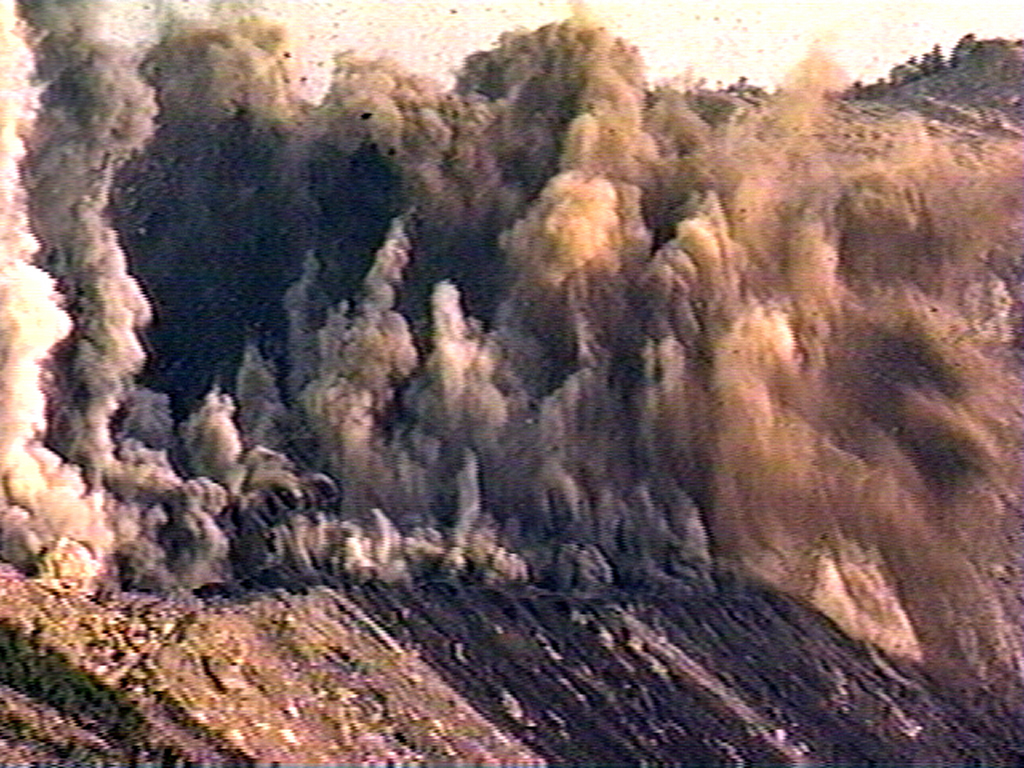
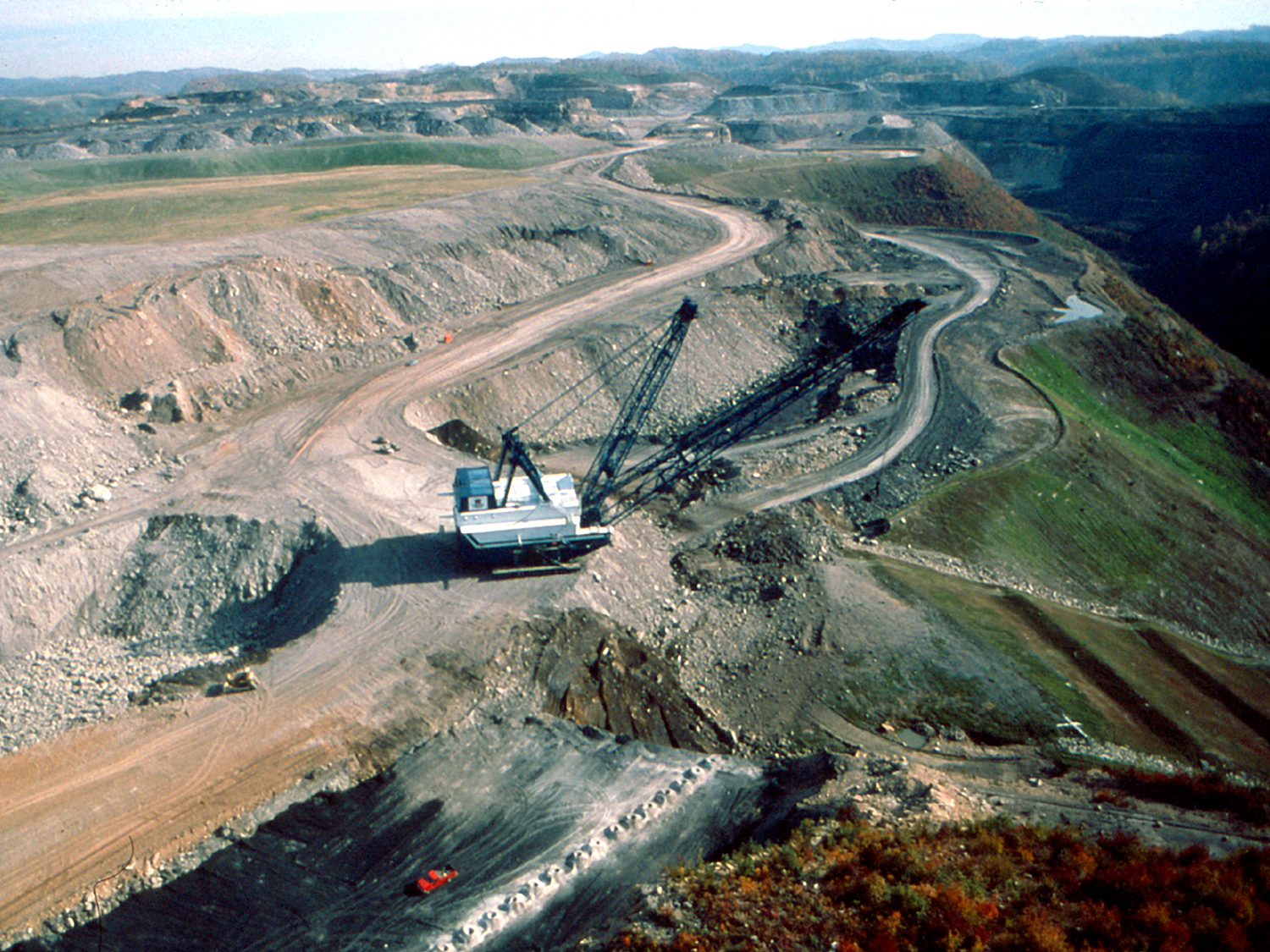
results in an absolute reduction in our environmental, economic, and social capital. Those landscapes don't just 'come back.' Nor can you just "restore" that landscape to it's former self (contrary to what many MTR companies want YOU to believe that they do). The soils become so compacted that plants are unable to grow. This= less forest, which =less possible timber resources, but also= less places for trees to grow and remove CO2 from the atmosphere.
Now, the second part of this is much more connected to the urban system: burning coal in/near urban areas produces air pollution, which has a multitude of health impacts. (And don't take that to mean we should just put coal-burning power plants 40 miles outside of cities--that means we would have to use more coal, and more resources to get that energy transferred that far back to where it is needed--oh wait...we already do that???....save that one for another time). The coal backers will come back here with the whole "clean coal" mumbo jumbo---but they may want to check their own industry. Just last week, Don Blankenship debated Robert Kennedy, Jr. (and was completely embarrassed by Kennedy, I might add). At the end of the debate, Blankenship conceeded that carbon sequestration, the advocated method of "clean coal," is a bunch of hogwash. So, "clean coal" = a pipe dream.
The alternative is we use wind, solar, geothermal (yes), and we use these alternatives on a decentralized system, rather than a centralized system, like coal power. More importantly, we rebuild/retrofit the existing urbanized landscape with passive-solar heating, more efficient insulation, green roofs, living walls, and other intelligent (yes) ideas. This will help reduce overall energy use, which will help reduce energy need, reduce coal input, reduce coal removal, and eventually, remove coal from the equation completely with replacement by renewable energy. Then, we are talking about the sustainability of our environmental, economic, and social capital, and we are talking about Green Urbanism.
Wednesday, November 11, 2009
Zombie malls and walkable urbanism
(This post is a response to a recent series of articles about dead and dying malls in Lexington, KY)
Rather than thinking of Lexington Mall as a blight or an eyesore, think of it as an incredible opportunity. Across the country, demographic changes and resource constraints are driving increased demand for walkable urban environments. Growing up in Lexington in the 1980s and 1990s, I watched the development of shopping centers at the edge of the city and sprawling subdivisions in Fayette's neighboring counties. This development pattern was appealing in a world of cheap gas and large households. But times are changing. Oil is more scarce and more expensive. Households are shrinking, driven by young single professionals and empty nesters. And with increasing awareness of the challenges of climate change, people are looking for a more "sustainable" lifestyle.
This is not some east- and west-coast trend that doesn't apply to Lexington. The recent housing market study commissioned by Lexington's Division of Planning determined that Lexington has an underserved demand for "higher density product and diverse communities where residents are motivated by proximity to work, walkable environment, and access to green space." Recent downtown development has begun to meet this need, and projects around the Newtown Pike extension are promising; but it's not necessary to focus all the energy downtown.
Long before recent changes in the housing market, a variety of factors--from online retail to continual development of newer, bigger malls further on the urban fringe--began undermining older retail centers like Turfland and Lexington Malls. This problem is not unique to Lexington, and the innovative solutions utilized elsewhere should guide plans for Lexington Mall. In her book Retrofitting Suburbia, Ellen Dunham-Jones examines similar "zombie malls," and shows how they can be remade to thrive in a more urban world.
The model of cities with a single high density center is a relic of the past. The major retail and office nodes along New Circle, Man O War, and the major roads that make up Lexington's "spoke and wheel" transportation system show that automobile oriented development has been poly-centric for a long time now. Why shouldn't high density walkable and transit-oriented districts also spread throughout the city? Lexington's political leaders, developers, and citizens should embrace Lexington and Turfland Malls as two great places to start this trend.
Rather than thinking of Lexington Mall as a blight or an eyesore, think of it as an incredible opportunity. Across the country, demographic changes and resource constraints are driving increased demand for walkable urban environments. Growing up in Lexington in the 1980s and 1990s, I watched the development of shopping centers at the edge of the city and sprawling subdivisions in Fayette's neighboring counties. This development pattern was appealing in a world of cheap gas and large households. But times are changing. Oil is more scarce and more expensive. Households are shrinking, driven by young single professionals and empty nesters. And with increasing awareness of the challenges of climate change, people are looking for a more "sustainable" lifestyle.
This is not some east- and west-coast trend that doesn't apply to Lexington. The recent housing market study commissioned by Lexington's Division of Planning determined that Lexington has an underserved demand for "higher density product and diverse communities where residents are motivated by proximity to work, walkable environment, and access to green space." Recent downtown development has begun to meet this need, and projects around the Newtown Pike extension are promising; but it's not necessary to focus all the energy downtown.
Long before recent changes in the housing market, a variety of factors--from online retail to continual development of newer, bigger malls further on the urban fringe--began undermining older retail centers like Turfland and Lexington Malls. This problem is not unique to Lexington, and the innovative solutions utilized elsewhere should guide plans for Lexington Mall. In her book Retrofitting Suburbia, Ellen Dunham-Jones examines similar "zombie malls," and shows how they can be remade to thrive in a more urban world.
The model of cities with a single high density center is a relic of the past. The major retail and office nodes along New Circle, Man O War, and the major roads that make up Lexington's "spoke and wheel" transportation system show that automobile oriented development has been poly-centric for a long time now. Why shouldn't high density walkable and transit-oriented districts also spread throughout the city? Lexington's political leaders, developers, and citizens should embrace Lexington and Turfland Malls as two great places to start this trend.
Tuesday, October 6, 2009
Charter Cities
Paul Romer, an economist at Stanford, has been recently begun advocating for a concept he calls a "charter city". In places like the United States, businesses and similar private enterprises are fairly nimble and able to adapt to changing conditions. Just as importantly, there is a strong system of rules and norms of behavior that allow businesses to fail or to become obsolete, while new ones step up to meet a need. In contrast, cities and other governmental entities are much more resistant to change, generally by design. This is generally a good thing for governments, where stability is essential. For businesses and individuals to adapt quickly, the rules of the system in which they operate need to be stable and well understood.
However, Romer makes a good point: that as societies develop and grow wealthier, there are consistent changes that can be reasonably well anticipated. This is particularly true for cities. A rural community has different needs than a small town, which has different needs than a large city, which has different needs than a major metropolis. Sometimes those needs follow a logical progression, such as the provision of higher levels of police presence. But in other ways, the rules that develop as a small town grows into a city can be inappropriate or outright counterproductive for a major metropolis.
Romer works in the field of global development economics, so he's particularly interested in the application of charter cities to developing countries. His prime example of a charter city is Hong Kong, which was established by a cooperative treaty between the United Kingdom and China. This focus is appropriate, since the growth in urban areas that has already occurred in the United States still is just now underway or looming for much of the rest of the world. The availability of unoccupied land, the obvious requirement for the establishment of a new city, also presents great opportunity. However, as an urban planning researcher in the US, I wonder whether there's something we can learn from the idea here. Romer points out that it's much harder and less efficient to change a broken system than to create a new one and let more nimble entities (businesses and individuals) choose which system they want to be a part of.
I wouldn't say our system of cities in the United States is broken, but it clearly has its flaws. Many like me are concerned that the cities that grew up in the age of automobile-oriented suburban development are poorly suited to the approaching age of peak oil and climate change. It's scary and sad to think of letting these cities "fail" (think Flint, MI), but it's also clear that they can't easily be reformed in the same way that a business would reorganize.
Environmentalists and urban planners are often opposed to greenfield development (the construction of new neighborhoods on formerly undeveloped land). Ultimately, a charter city is a mega-scale greenfield development. However, for the opportunity to create a new city that breaks the mold formed over the last century, I think it's something entrepreneurial policymakers--particularly at the state and local level--should strongly consider.
However, Romer makes a good point: that as societies develop and grow wealthier, there are consistent changes that can be reasonably well anticipated. This is particularly true for cities. A rural community has different needs than a small town, which has different needs than a large city, which has different needs than a major metropolis. Sometimes those needs follow a logical progression, such as the provision of higher levels of police presence. But in other ways, the rules that develop as a small town grows into a city can be inappropriate or outright counterproductive for a major metropolis.
Romer works in the field of global development economics, so he's particularly interested in the application of charter cities to developing countries. His prime example of a charter city is Hong Kong, which was established by a cooperative treaty between the United Kingdom and China. This focus is appropriate, since the growth in urban areas that has already occurred in the United States still is just now underway or looming for much of the rest of the world. The availability of unoccupied land, the obvious requirement for the establishment of a new city, also presents great opportunity. However, as an urban planning researcher in the US, I wonder whether there's something we can learn from the idea here. Romer points out that it's much harder and less efficient to change a broken system than to create a new one and let more nimble entities (businesses and individuals) choose which system they want to be a part of.
I wouldn't say our system of cities in the United States is broken, but it clearly has its flaws. Many like me are concerned that the cities that grew up in the age of automobile-oriented suburban development are poorly suited to the approaching age of peak oil and climate change. It's scary and sad to think of letting these cities "fail" (think Flint, MI), but it's also clear that they can't easily be reformed in the same way that a business would reorganize.
Environmentalists and urban planners are often opposed to greenfield development (the construction of new neighborhoods on formerly undeveloped land). Ultimately, a charter city is a mega-scale greenfield development. However, for the opportunity to create a new city that breaks the mold formed over the last century, I think it's something entrepreneurial policymakers--particularly at the state and local level--should strongly consider.
Monday, September 14, 2009
But I like the water....
Everyone loves water--sounds, sights, and of course, swimming in it! In fact, we love water so much, we build right up next to streams, creeks, and rivers--right in the floodplains. This is common both in cities, suburbs, and the countryside. Cities eventually decided to put most streams into pipes and culverts though, so half the time, we don't even realize where the streams are, or should be naturally.
It's ok to like water, to enjoy it--but we have to realize the limits to our actions. Floodplains are critical for stream/river health. They help relieve the river of excess flows (or floodwaters), and the riparian buffers associated with the floodplain help filter pollutants, regulate stream temperature, and allow for an increase in biodiversity. If we let floodplains and appropriate riparian buffers be, we would largely be ok.
The problem though, is that because we do build in floodplains and remove riparian buffers, and we remove the ability of streams and rivers to perform natural functions (which they do free of charge), we require more economic input the mediate all the problems that occur because of our previous decisions. Furthermore, insurance for everyone is affected. If you have home insurance, and the insurer also insures people in who live in floodplains, you are at an ever-increasing risk of having your rates go up due to those other folks. Makes very little sense, right? Build in floodplains, remove natural functions, then get paid back on someone else's dime for having your home destroyed by a flood...
The other possible insurance scenario is that the government, or government programs (such as FEMA), insure construction in floodplains, knowing well that they will eventually flood. Of course, we all know by now that tax dollars are used for any government programs, and that is no different here--YOUR tax dollars insure wasteful building in floodplains.
In the end, this all comes down to poor economic logic--deregulation and an entirely free market is not the way to go. Regulations, if written well, are meant to prevent wasteful spending, particularly wasteful tax dollar spending. Without regulations, Appalachia would be gone, our waters would still be polluted like in the mid 1900s, more people would be dying from cancer, we'd have polluted our earth much worse, etc. And ultimately, all that means more expenses that were unnecessary if problems were dealt with from the beginning.
Saturday, August 29, 2009
I'm Just a Regular Person--What Can I Do?
Green Urbanism at its peak will need the understanding and participation of a majority of everyday citizens. Everyone has the ability to understand both the parts of green urbanism, and to participate in parts of it.
First and foremost, everyone can make decisions on where to live. This alone has major impacts on other components of green urbanism. For example, if I choose to live in a 3000 square foot house in a court or cul-de-sac in the middle of a suburban neighborhood, I've already sealed my fate as an automobile-driving, energy intensive American. The house itself is terribly inefficient, and not meant to allow for natural air circulation from open windows. My kids, should I choose to have some, would grow up in the same environment. With no park within an walkable distance, my kids would either play in the backyard, which is truly an unimaginative, dull environment, or sit inside and play video games all day. The neighborhood would probably govern any additions or changes to the house, such as the addition of a green roof. They might not allow it.
A second opportunity for every person to participate in the push towards green urbanism is to ride transit more, or ride your bicycle. Not only is it more healthy for every person to ride a bicycle more, or walk to transit stops, it is also intelligent. Everyday, people that live near you drive in the same direction, possibly to the same general office park or complex. You each drive separately, spending twice (or more) the fuel and money necessary. Instead, you could each ride the bus, along with 15-20 (or more) other individuals. On the bus you could read a book, something that you never have time to do normally with the 30 minutes (minimum) that you spend driving each day. Even better, your choice to ride the bus has influence on the types of land uses or business and retail types that occur throughout the urban environment. More people riding the bus equals more small shops and jobs and density around transit stops, and a more walkable environment.
Third, everyone that currently lives in a suburban home with a yard can easily plant vegetables (and some fruits) in their yard. They can create an urban agricultural base. By growing your own veggies and fruits, you have control over what you eat--and whether or not it contains diseases. By choosing to grow a garden, you also remove lawn space, meaning you no longer go through the ridiculous process of "water grass-mow grass-fertilize grass with synthetic fertilizers-water-mow grass again." You also no longer use fuel to do this. You also discourage the terribly inhumane and unsustainably industrial agricultural systems that have been in place for years. Did you know that illegal immigrants (Mexican) in California's famed fruit agriculture zone get paid vastly under minimum wage (off the books, of course), to farm a region that is supported entirely by irrigation systems, rather than natural precipitation patterns. So, in one fell swoop, you have created a more healthy lifestyle for you and for others, while also helping the environment.
There are plenty of other things you can do directly related to being "green." Retrofit windows to be uber-energy efficient (called passive solar). Put solar panels on your house to reduce your energy consumption from coal power plants. Better yet, look into new windows that may soon have floppy solar sheets installed between the panes. Install rain gardens around your yard below your roof downspouts. Plenty of cool opportunities!
Friday, August 28, 2009
Artful Rainwater Design
Water. We all drink it, everyday. Some drink out of a plastic bottle, some out of Nalgenes, Kleen Kanteens, or SIGGS. The water we drink though comes from the sky, from rain. The first post of this blog discusses the hydrologic cycle in the context of watersheds. Stormwater is the human term for rainwater that falls on urban surfaces. Stormwater is often removed via pipes, as quickly and efficiently as possible. This approach has consistently resulted in downstream flooding, stream habitat destruction, and other substantial environmental and social issues. Though over the years attempts have been made to correct the problems with this approach, it still continues to be a problem to this day.


There are alternatives though. Green infrastructure is starting to be more widely used to compensate for the negative aspects of the prototypical engineered stormwater management approach. Green roofs, bioretention swales and structures, rain gardens, and other such elements utilize natural systems to remove rainwater. Penn State Landscape Architecture professors Stuart Echols and Eliza Pennypacker recently called some of these green infrastructure techniques "Artful Rainwater Design (ARD)." These designs are named for their intent and ability to act as art in the urbanized landscape, and function as stormwater management mechanisms. In many instances, these designs are also used to convey information to the public, sometimes via signage, and other times simply through informative design.
Kevin Jensen, a graduate student at Penn State, has developed a survey to gauge just exactly what the public does comprehend from such designs. Regardless of whether you, the reader, may be interested in ARD, it would be extremely helpful for Kevin, and educational for yourself, if you took the time to complete the survey. If you are interested in learning more about ARD, have a gander at this site.


Subscribe to:
Posts (Atom)